Case study · scRNA-seq
How does the cellular composition of the mouse heart change as pressure-overload heart failure develops over six weeks, and which immune populations drive late-stage remodelling?
Three questions: (1) which cell populations appear in the failing heart that aren’t there in the healthy one, (2) how the composition evolves week-by-week, and (3) whether the temporal pattern of immune infiltration points to a specific therapeutic window.
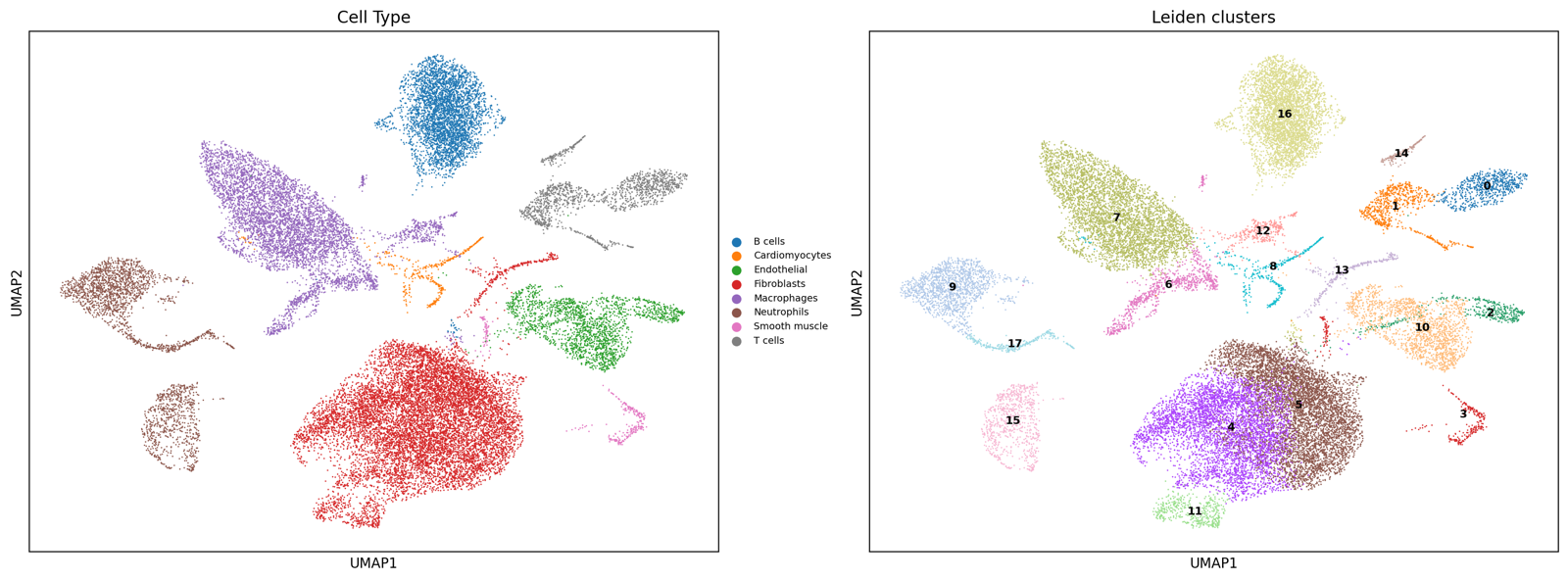
End-to-end scRNA-seq workflow on 4 samples (Sham + TAC 2w/4w/6w, 10x Chromium): per-cell QC, doublet filtering, normalization, integration across timepoints, Leiden clustering, marker-based cell-type annotation, differential abundance testing (Milo), differential expression per condition versus sham, and pseudotime analysis along the disease trajectory.
scRNA-seq deliverables often arrive as a folder of plots with no narrative — leaving the client to figure out what the data actually says about biology. This case study shows how we wrap the figures in a temporal story that ends in a concrete therapeutic-window hypothesis (“anti-inflammatory intervention should be timed for the 2-week to 4-week window before the B-cell expansion dominates”), grounded in the abundance + DE evidence.
The actual client deliverable layout — same files, same structure, same format.
Fixed-fee, 7–10 business days. Email with your omics type + sample count and a quote comes back within 2 business days.